Linking Ideas to resolve a doubt

Why is the day masculine in Spanish (and French, Portuguese, Italian, etc)?
For Spanish learners: Is “día” masculine or feminine? Common answer: “It’s feminine because it ends in A.” Unfortunately, it isn’t.
(… and that is a rule with many exceptions)
Try this thinking connection! During the day, the sun shines -
“el sol” … so… EL día (masculine).
Example: “El día es largo y luminoso en el verano.”
Some learners need a little more thinking help. Here we go…
- The Greek god Helios rules the sun.
• Need an image because you are a visual thinker?
Here is the god Helios, riding his golden chariot across the sky.
Image: British Museum, London (Museum Number: 1867,0508.1133)
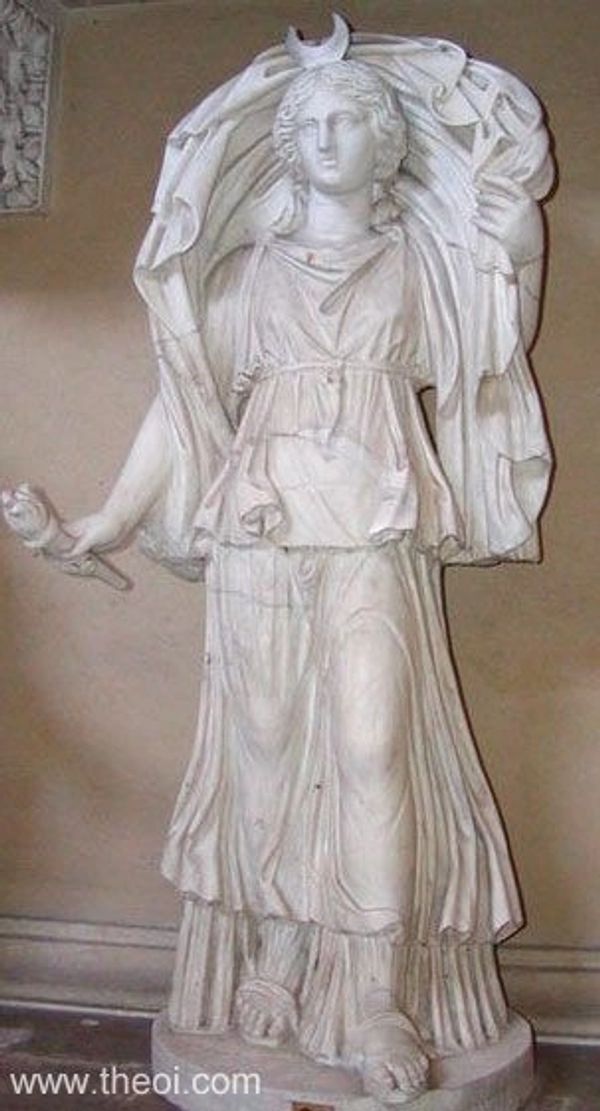
... and why is the night feminine?
Then, what about “noche”? (meaning night) Is it masculine or feminine? You cannot guess because in Spanish it ends in “e” and there is no rule.
Think! During the night, the moon shines - “la luna” … so… LA noche
Example: “La noche es oscura y larga en invierno.”
Here is the goddess Selene (Greek) or Diana (Roman) who rules the moon.
• Greco-Roman marble statue, Pio-Clementino Museum, Vatican Museums https://www.theoi.com/Titan/Selene.html